

Small business owners often get sold processing services but rarely get a straight explanation of how the system works. With 74% of small businesses in 2026 accepting credit cards, understanding what happens behind the scenes is more important than ever. While Live Oak Bank is not a payment processor, we believe business owners should have the knowledge they need to make informed decisions about their finances. In this guide, we'll break down the credit card processing ecosystem and explain how money moves from the customer to your business.
Credit card processing is a secure system that enables a business to accept credit or debit card payments and safely move money from the customer’s bank account to the business. This process allows businesses to increase sales by broadening the range of payment processing options for customers.
Credit card processing may seem straightforward, but several parties work together behind the scenes to move funds from the customer to your business. Here are the key players involved:
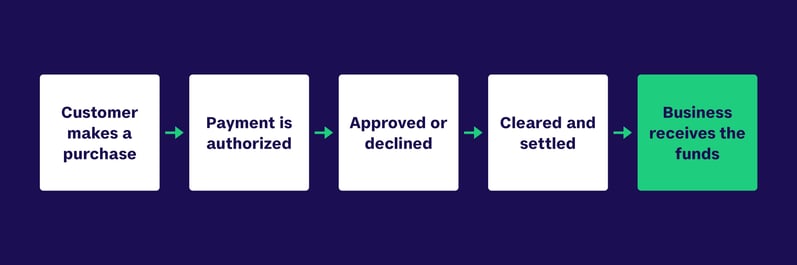
Every time a customer pays with a credit card, the business pays a processing fee that is typically made up of interchange fees, assessment fees and payment processor markups. Understanding the purpose of each fee can help business owners evaluate different payment processing options.
Before choosing a processor, ask for a complete breakdown of all fees. It can also be good to ask which fees are fixed by the card networks and which are set by the processor, as those may be the areas where pricing can vary between providers. Transparency upfront can make it easier to compare options, understand the true cost of processing and determine what makes the most sense for your business.
One of the most overlooked aspects of credit card processing is timing. A sale can be approved instantly, but the funds don’t become available for up to three business days. Funding delays can create cash flow challenges even when sales are strong. As a result, business owners may struggle to cover expenses.
Processing fees ultimately reduce the amount of cash received by the business. Every transaction includes processing costs, meaning the small fees add up across hundreds or thousands of transactions. Businesses should account for processing costs when forecasting cash flow and determining pricing.
Successful cash flow management requires looking beyond sales volume. Business owners must understand how payments move through the system and when they should expect cash to hit their accounts. While payment processing determines how money is collected and transferred, a business checking account serves as the hub where those funds are managed. Pairing a strong understanding of processing timelines and costs with the right banking tools, such as a Live Oak business checking account, can help business owners maintain visibility into cash flow and make more informed financial decisions.
Rather than comparing providers side by side, use these questions to evaluate whether a payment processing solution fits your business's operational needs:
Your business’s credit card processing data can provide insight into sales activity and revenue consistency. Having consistent transaction volume helps demonstrate stable customer demand. Lenders are often looking for patterns over time rather than a single strong month. Businesses with predictable sales may be able to present a clearer financial picture during the lending process.
For businesses looking to expand, purchase equipment, acquire real estate, refinance debt or increase working capital, financing might be an important next step. Live Oak offers SBA loan options designed for a variety of different goals across many industries. SBA loans can provide longer repayment terms and competitive financing structures compared to conventional financing options. As your business grows, the right financing can help turn plans into action. Explore Live Oak’s SBA loan options to learn more.
Credit card processing fees typically cost a business 1.5% to 3.5% of each transaction’s total. The amount you pay depends on factors such as card type and transaction location. It’s important to look for a service that minimizes fees for your business’s sales volume.
For most merchants, funds from credit card transactions arrive in typically one to three business days, although actual funding time varies by processor, transaction type and financial institution. Factors such as the merchant's enterprise, payment methods, inaccurate information, bank holidays and more can influence the payment timeline.
A payment processor authorizes transactions and moves money between banks, while a payment gateway captures and encrypts customer payment data at checkout. Online sales require both a gateway and a processor while in-person sales generally only need a payment processor.
We're committed to your privacy. Live Oak Bank uses the information you provide to us to contact you about our relevant content, products, and services. You may unsubscribe from these communications at any time. For more information, check out our privacy policy.


